Elena Ochoa
Ofrenda a la tormentaElena Ochoa is an old friend of Rosario whose memories of a secretive group in Baztán give Amaia Salazar a crucial lead in the investigation of suspected infant sacrifices. Afraid to speak openly and dead before the investigation can fully unfold, Elena remains present through what she witnessed, the house she identifies, and a warning letter that turns her death into another sign of the danger surrounding the case.
Identity and Background
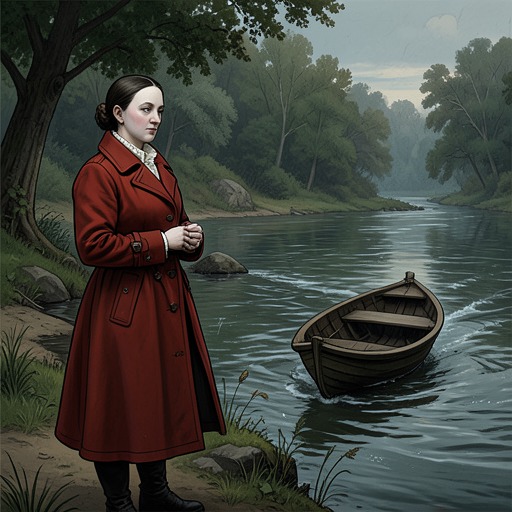
Elena was a longtime friend of Rosario and accompanied her to meetings of a group established in Baztán during the 1970s and early 1980s. Amaia describes the group as pseudo-Satanic: its members practised animal sacrifice and, according to what she learned, went so far as to propose human sacrifice, particularly of newborns and very young children. Elena attended the meetings with Rosario until the rites became too savage for her to tolerate. Her presence at those gatherings makes her more than a distant observer, but the evidence does not establish that she took part in the sacrifices.
The group’s past connects Elena’s recollections to a specific house and to families whose children died young. Amaia’s later account identifies the house’s owners as a couple who had hosted meetings attended by Doctor Berasategui. The couple acknowledged that he had visited, though they refused to explain the nature of their relationship with him. They also said their daughter had died before the age of two during a trip to the United Kingdom. Investigators found no death certificate, hospital record, or evidence of the trip. These circumstances do not, by themselves, establish what happened to the child, but they make Elena’s knowledge of the group and its location consequential.
Elena and Amaia’s Encounter
When Amaia visits Elena, Elena lets her into the house and prepares coffee, maintaining the local courtesy even though she plainly does not want the conversation. The ritual gives Amaia a few minutes to gather her thoughts. She has a small white coffin, found to contain packets of sugar instead of a body, and the word sacrifice on her mind; she has not yet worked out all the questions she needs to ask.
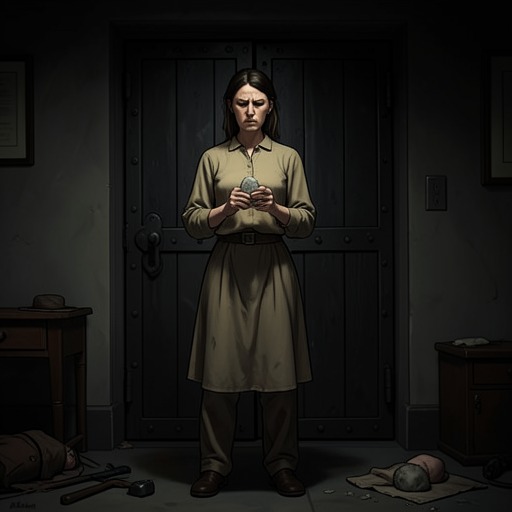
Elena’s hands tremble as she serves the coffee. The clink of a spoon against the cup abruptly irritates her, and she throws the spoon onto the tray. She apologizes for being nervous and asks Amaia to say what she wants so that the visit can end. When Amaia asks whether the group carried out a human sacrifice, Elena visibly shakes and begs her to leave, saying she cannot talk. Amaia presses her: Rosario is free, and finding the house might provide answers. Elena replies that the people involved would kill her if she told. Her fear is not a general reluctance to revisit the past; she presents the threat as immediate enough to silence her.
Despite that refusal, Elena eventually gives Amaia the location. Amaia later explains that Elena told her where the house was, and that she visited it out of curiosity. Elena’s information thus moves the inquiry from an old, frightening story toward a place that can be examined and people who can be questioned.
The Letter and the Black House
After Elena’s death, her daughter contacts Amaia from Elizondo. She has found a letter beneath her mother’s pillow after moving it aside at bedtime. The daughter says that the family had come to believe Elena had taken her own life, as the doctors had advised them to understand her fears and paranoia as illness. But the letter is not addressed to her; Elena has written it to Amaia. Her daughter’s grief and disbelief accompany the revelation that Elena had been trying to warn the investigator directly.
In the letter, Elena says that the people she feared have found a way to reach her and that something inside her is consuming her. She had initially mistaken the sensation for heartburn, but came to believe it would kill her. The letter gives no independently confirmed medical explanation for her condition. Its account is therefore both a warning and a statement of Elena’s terror, rather than proof of how she died.
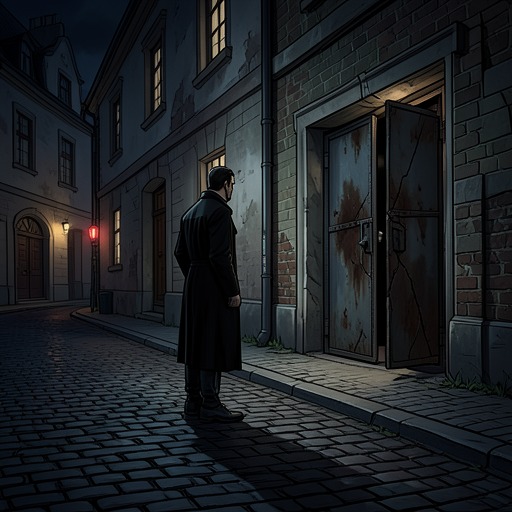
Elena describes the house as an old, dilapidated farmhouse on the Orabidea road, with biscuit-colored walls and a dark roof. Its shutters were habitually half closed. It stands in an unusually flat meadow, with no trees or other growth around it; from above, the house is invisible, and it appears suddenly as the road turns. Elena calls it a black house, clarifying that the name refers not to the color of its walls but to what is inside. She expects Amaia to seek it out, and warns that if Amaia is the person she claims to be, and has survived the fate the group intended for her, the group will find her whether or not she looks for them.
Death and Investigative Significance
Elena is found dead at home after her daughter comes from Pamplona because Elena has stopped answering the phone. She has vomited a large quantity of blood; the attending doctor tells the police that something about the death is unusual. Later, Amaia remembers Elena lying in a pool of blood among walnut shells. The discovery gives the death a disturbing physical specificity, while the letter makes clear that Elena had anticipated a threat. The evidence leaves the exact cause of death unresolved, and does not establish whether it was suicide, illness, or an act by the people she feared.
Elena’s testimony also helps shape Amaia’s account of the wider pattern. At a later briefing, Amaia links the group at Argi Beltz with similar practices suspected at a farmhouse in Lesaka, and describes a priest-like leader who moved between the groups without living with either. She reports that a witness placed Doctor Berasategui and his car at the house on several occasions, and that families associated with the meetings included parents whose young daughters had died. In discussing Ainara Martínez Bayón, Amaia says that a witness corroborated her birth at Argi Beltz and her death in strange circumstances, while the parents’ account of a fatal illness abroad lacked documentary support. Elena is part of the chain of testimony that enables Amaia to pursue these connections, though the investigation’s claims rest on more than Elena alone.
The meaning of Elena’s warning deepens after Amaia encounters a text about sacrifice in the notes of Marc. It describes parents offering a newborn to evil in exchange for a desired favor, an idea that echoes the word Elena had used and the empty white coffin filled with sugar packets. The echo does not prove that every suspected death followed that ritual, but it gives the investigation’s scattered objects and testimony a shared, ominous vocabulary.
Memory and Narrative Role
Elena’s role changes after her death: first she is a frightened source who cannot bring herself to name what she knows, then the author of a letter that guides Amaia toward the house and explains why she feared speaking. The ordinary gestures surrounding her—coffee carefully prepared, a spoon flung aside, a daughter moving a pillow—stand beside the extraordinary possibility that a hidden group can reach its former members. Her courtesy persists even as her fear interrupts it; her knowledge survives when she does not.
Amaia later thinks of Elena amid blood and walnut shells while speaking with Sarasola, recalling that she had known someone who expressed the same conviction that no protection would last forever. In this way, Elena’s story does not end with the discovery of her body. Her warning becomes a measure of the danger facing Amaia, while the image of the black house gives the investigation a destination shaped as much by concealment and fear as by evidence.